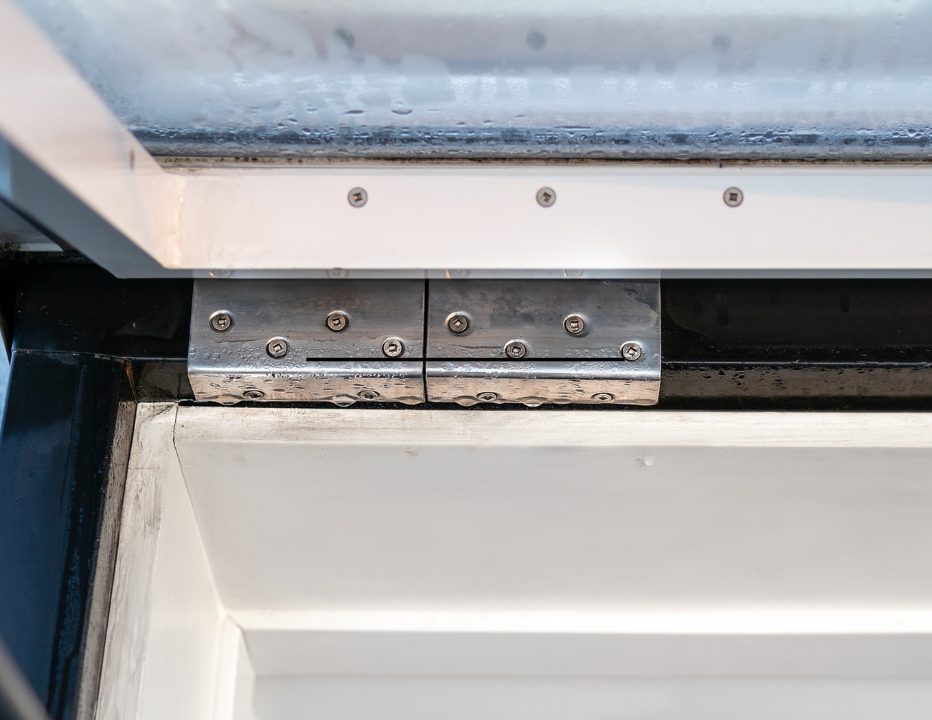
Water on a skylight does not always mean rain got through the roof. Skylight condensation forms when damp indoor air meets cold glass or a cold frame; a leak brings water in from outdoors. Both can harm paint, trim, and drywall, so it pays to find the source rather than wipe up the drip and hope it stops.
1. Check When the Water Shows Up
The first clue is timing. Skylight condensation may form on a cold, dry day, while a roof leak is more apt to show up as rain falls or snow starts to melt.
Think back to what took place in the home. Did the glass fog up after a shower, a long cook time, or a load of wet gear came indoors? Damp air rises, and a cold pane can turn that air into drops of water.
Keep a brief log for a week:
- Note when the drops start and when they dry.
- Note if rain, snow, or a thaw took place.
- Take a photo before you wipe the water away.
- Mark any link to baths, meals, or lots of guests.
A clear pattern can help trace the source. Water that shows up only in cold, dry weather may point to indoor air. Water that starts with each storm calls for a roof check.
2. See Where the Water Sits
Look at the pane from inside the room. Drops spread over the glass or frame may come from damp air in the room. If you can reach the pane with no risk, wipe a small spot dry and watch to see if the drops come back.
Fog that stays put when you wipe the room side may sit between the panes. That can mean a seal in the glass has worn out. A failed glass seal does not prove that rain has got into the roof, but it does need a closer look.
Do not climb onto the roof to test the outer glass. A safe check from the room side gives you clues; a pro can check the parts you cannot reach.
3. Trace the First Wet Spot
Water can run down a frame and pool on the sill. It can also move along wood or drywall before you see a stain. For that reason, the spot where water lands may not be the spot where the fault began.
Look for these signs:
- Drops that form on the pane and run to the sill.
- A stain that starts at the top of the light shaft.
- Soft trim or paint that peels near one corner.
- A mark that grows after each storm.
A stain beyond the frame needs a prompt check. It may point to a roof or flash fault, though damp air in the shaft can leave a mark there too. Do not paint over the stain until you know why it formed.
4. Look for Damp Air Elsewhere
A wet skylight may be one sign of damp air in the home. Check nearby glass, cold walls, and other rooms. If more than one pane beads up on cold days, the air in the home may need more flow.
Use bath fans when you shower and a range hood that vents outdoors when you cook. Let room air reach the skylight; a blind shut tight for long spans may leave the glass cold and still. Wipe up drops so they do not soak the frame or trim.
Less drip after better air flow is a useful clue, not a final test. A home can have damp indoor air and a roof leak at the same time. If stains keep on growing, book a site check.
5. Watch for a Pattern That Gets Worse
One foggy pane on a cold day is not the same as a new brown stain each time it rains. Check whether the wet area grows, how long it stays damp, and if the wood feels soft. A stale smell near the shaft may also point to water that has sat too long.
Do not pack fresh caulk over a seam as a first fix. That may hide the route water takes and make the true fault hard to find. A pro can check the glass, seals, frame, flash, and roof area as one set of parts.
The right fix starts with the right cause. A worn glass seal, a wet light shaft, and a roof leak call for quite different work.
To learn more about unit types and repair work, see Aluplex’s skylight page. Its FAQ also has tips on foggy glass, seals, and care.
If you have drips, fog set deep in the pane, or a stain that will not dry, ask Aluplex to take a look. Share your photos and notes on when the water shows up. The team can check the unit and the roof area near it, then talk you through the next step. Book a site visit before a small wet patch turns into a much larger task.